
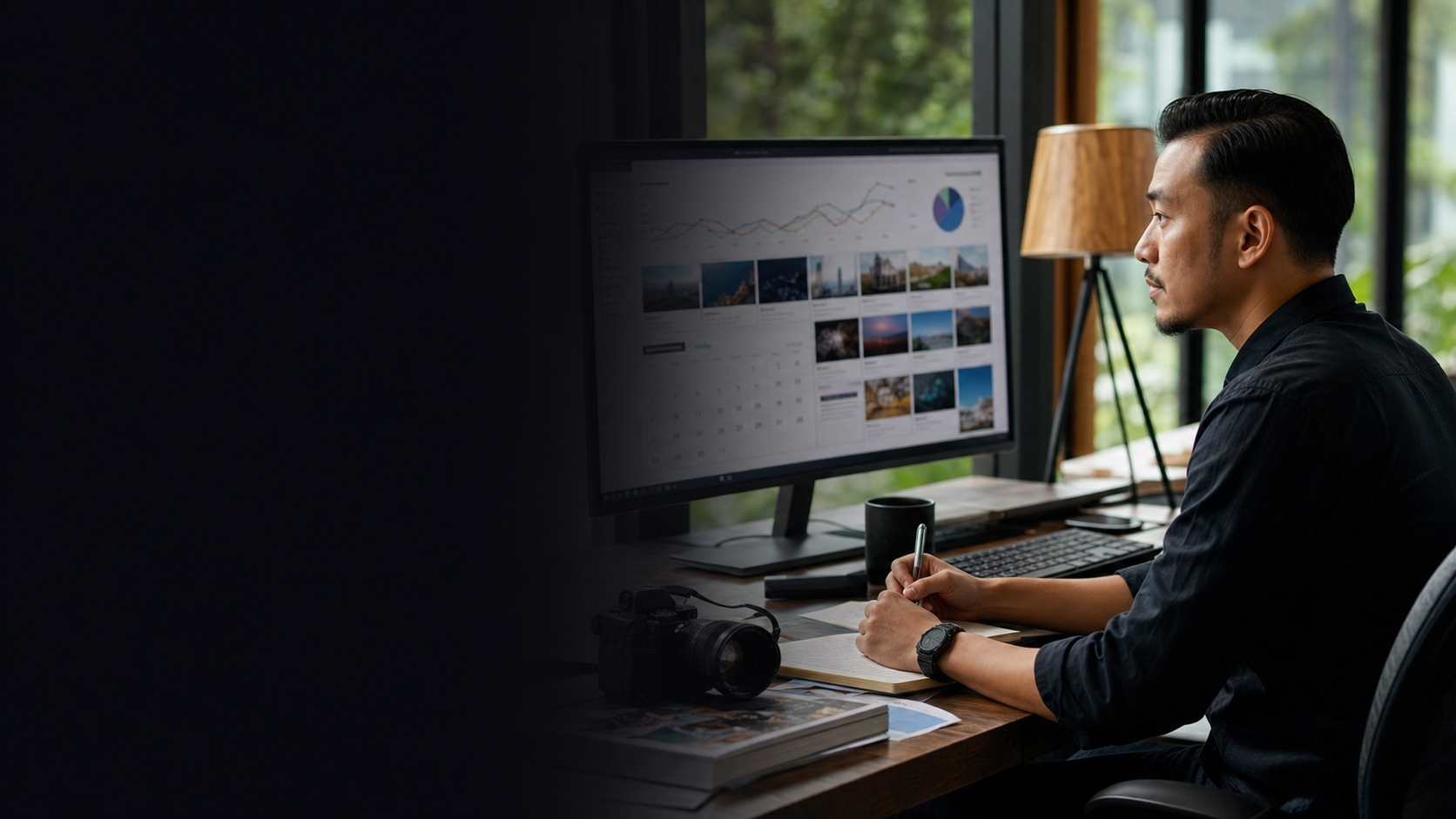
Digital marketing for nail salons in Malaysia combines local search visibility, Google Business Profile signals, and social content that shows finished nail work clearly enough to earn appointment bookings.
The exact-match query is the subject here, and the practical version of it looks different in Kuching, Kuala Lumpur, or Penang than it does in a global guide. Malaysian salon owners compete for the same nearby searches, the same walk-in catchment, and the same repeat clients. The sections below cover what to fix first, why local search decides who gets booked, how to show nail work so it converts, how paid promotion and reviews fit together, what Blackstone Intelligence has delivered for comparable local service brands, and which spending habits waste a salon budget.
Digital Marketing For Nail Salons: What Malaysian Owners Need First
Before any campaign spend, a salon needs three things working: a claimed and complete Google Business Profile, a website or landing page that loads quickly on a phone, and a booking path that takes fewer than three taps. Everything else builds on that base.
Malaysian salon searches are overwhelmingly mobile and local. A client searching for a manicure or pedicure near a specific neighbourhood is usually ready to book within the same session, not researching for weeks. That changes the priority order. Visibility in Maps and the local pack matters more than a long blog archive, and a slow or broken booking flow costs bookings that were already earned.
Here is the sequence that makes sense for most Malaysian nail salons, ordered by dependency rather than by budget size.
- Claim and fully complete the Google Business Profile, including service categories, service list, hours, and photos of finished work.
- Build or fix one fast, mobile-first page that names the salon's services and its actual location or service area.
- Add a booking path that works without a phone call, such as an online booking link, WhatsApp enquiry, or both.
- Publish consistent social content showing real nail work, with captions that name the service and the area served.
- Start a review request habit after every completed appointment.
- Add paid promotion only after organic visibility and the booking path are already converting.
- Track which services and which channels produce bookings, then shift effort toward what works.
The order matters because paid traffic sent to a weak profile or a broken booking page produces spend without bookings. Salons that fix the foundation first get more from the same advertising budget later.
What the local market changes
Malaysia's salon market is dense in urban areas, which means proximity and recency signals carry real weight in local results. A salon two streets away with a complete profile and recent photos will often outrank a better-known salon with a stale listing. Language also matters. listings and page copy that reflect how local clients actually search, including common shorthand for services, tend to match more queries than formal service names alone.
Why Local Search Decides Which Nail Salon Gets Booked
Local search decides bookings because the client is choosing between salons within travelling distance, and the search engine is choosing which of those salons to show first. The salon that appears in the map pack with complete information and recent activity usually gets the call.
Three signals do most of the work. Proximity is fixed by the salon's location and cannot be changed. Relevance is controllable through categories, service names, and page content. Prominence is built over time through reviews, photos, citations, and consistent business information across the web.
Google Business Profile sits at the centre of this. A profile with the wrong primary category, missing services, or no recent photos gives the search engine little to match against specific queries. Salons that list individual services, add photos regularly, and keep hours accurate give themselves more chances to appear for the searches that matter.
Location-specific landing pages extend the same logic to the website. A single page trying to cover every service and every area competes weakly for all of them. Separate pages for distinct services, and for distinct areas where the salon genuinely serves clients, give each search a page that matches it closely.
Reviews as a ranking and trust signal
Reviews affect both visibility and the decision to book. A steady flow of recent reviews signals an active business, and the wording inside reviews often contains the service and location terms that help match queries. Asking after every appointment, and responding to reviews, keeps that flow consistent rather than bursty.
Content That Shows Nail Work Clearly Enough to Convert
Nail content converts when it shows the finished result clearly and names what the client is looking at. A sharp photo of a completed set with a caption naming the service, the finish, and the area served does more work than a polished brand image with no service detail.
Short video performs well for this category because nail work is visual and process-driven. A clip showing the transformation from bare nails to finished set holds attention and demonstrates skill at the same time. Before-and-after posts carry the same information in a single frame.
Consistency matters more than production value. A salon posting regularly with phone-shot photos of real client work will usually outperform one posting occasional studio content, because the regular posts keep the profile and social accounts active and give the search engine fresh material to associate with the business.
Captions should carry the service name and the location naturally. Writing "gel manicure in Kuching" inside a caption is not keyword stuffing; it is the same phrase a client would type. That alignment between how the salon describes its work and how clients search for it is the mechanism that connects content to bookings.
Where content and booking connect
Every piece of content should have a next step attached. A post without a booking link, a profile without a booking button, or a page without a clear contact path leaves the client to find the next step alone, and some of them will not bother.
Paid Promotion Reviews and Repeat Booking Systems
Paid promotion works best after organic visibility is established, because the foundation determines whether paid traffic converts. A salon with a complete profile, a fast booking page, and recent reviews gets more bookings from the same ad spend than one sending traffic to a weak destination.
Geo-fenced social advertising suits nail salons because the client base is genuinely local. Restricting ads to a tight radius around the salon keeps spend concentrated on people who can realistically visit. Problem-and-solution video formats, showing a specific service and its result, tend to hold attention better than generic brand ads.
Review generation is the cheapest retention and acquisition system available. A simple habit of requesting a review after each appointment, with a direct link, builds the profile over time. Responding to reviews, including critical ones, shows an active business and gives future clients more confidence.
Repeat booking systems close the loop. Reminder messages, rebooking prompts at checkout, and a simple loyalty incentive reduce the number of clients who drift away between appointments. Retaining an existing client costs far less than acquiring a new one, and the repeat visit pattern itself strengthens the salon's local signals.
What paid promotion cannot fix
Advertising cannot compensate for a profile with the wrong category, a booking page that fails on mobile, or a service list that does not match what clients search for. Those are foundation problems, and spending against them produces traffic without bookings.
What Blackstone Intelligence Has Delivered for Local Service Brands
Blackstone Intelligence is a Kuching-based AI systems and digital growth agency operated by Blackstone Consultancy Sdn Bhd. Its documented local search work is directly relevant to how a nail salon's visibility gets built, even though the case studies come from other service categories.
For Sinar Saredah Sdn Bhd, a commercial and residential laundry and dry cleaning service in Malaysia, the client was buried on page three or four of Google results for searches like "dry cleaning near me". The work included optimising the Google Business Profile and website for hyper-local, intent-driven keywords, building location-specific landing pages, adding schema markup, and running review generation campaigns. Geo-fenced social ads were restricted to users within a 5-10km radius of physical locations, and problem-and-solution video ads ran on Facebook and Instagram.
The reported outcomes from that engagement include a 420% increase in local search visibility, a consistent 3.5x return on ad spend from social advertising, a 65% reduction in cost per acquisition, and the number one spot in the Google Local Pack for primary locations.
A second relevant example is Eyonic Sdn Bhd, where Blackstone refined site structure, on-page targeting, service content, internal links, and local search signals for CCTV, access control, and security services. That client reached page one for targeted local search terms within 20 days.
These are laundry, dry cleaning, and security engagements, not nail salons. The transferable part is the method: local profile optimisation, location-specific pages, review generation, and tightly geo-fenced paid social. The specific numbers belong to those clients and should not be read as a forecast for a salon.
How the same method maps to a salon
A nail salon's version of that method looks like a complete Google Business Profile with accurate service categories, individual pages for distinct services and service areas, a review request habit after every appointment, and paid social restricted to the salon's real catchment. The mechanism is the same; the content and the radius change.
Common Mistakes That Waste a Nail Salon Marketing Budget
The most expensive mistake is running ads before the profile and booking path are ready. Traffic that arrives at an incomplete listing or a broken booking flow produces spend without appointments, and the salon often concludes that advertising does not work when the destination was the problem.
Other recurring waste includes treating every service as one page, which leaves each search without a close match; ignoring reviews until the profile looks inactive; posting content with no booking link attached; and targeting too wide a radius, which spends budget on people who will never travel to the salon.
A final common error is measuring the wrong thing. Follower counts and impressions do not fill appointment books. Bookings, repeat visits, and the cost of acquiring each booking are the numbers that show whether the effort is working, and they are the numbers worth tracking from the start.
Digital marketing for nail salons rewards sequence over spend. Salons that fix the local foundation, publish consistent visual content, build reviews steadily, and only then add paid promotion tend to get more from every ringgit than salons that start with advertising and work backwards.